

That quote you got for termite tenting seems way too high, right? Here’s the thing: most homeowners overpay by $800-1,500 simply because they don’t know what actually drives pricing. The average South Florida home costs $1,800-3,500 to tent, but yours could be less.
We’re breaking down exactly what you’ll pay and why. No fluff, just real numbers from actual jobs.
Here’s what we’ll cover:
- Actual price ranges by square footage
- The 7 factors that spike your quote
- Hidden fees companies won’t mention upfront
- Cost comparison: tenting vs. spot treatments
- How to cut costs without cutting corners
- Red flags in suspiciously cheap quotes
At Caught’em Termites & Pest Control, we’ve tented over 3,000 South Florida homes in 20 years. We know these prices inside out because we live them daily. Plus, we actually show you the math behind your quote.
Actual Price Ranges by Square Footage
Termite tenting costs $1-4 per square foot, but here in South Florida, you’re looking at the higher end of that range. We’re talking real numbers from actual homes we’ve treated.
South Florida Tenting Prices by Home Size
| Home Size | Base Cost Range | Typical South FL Cost |
|---|---|---|
| 1,000-1,500 sq ft | $1,000-2,000 | $1,500-2,500 |
| 1,500-2,000 sq ft | $1,500-2,500 | $2,000-3,000 |
| 2,000-2,500 sq ft | $2,000-3,500 | $2,500-3,500 |
| 2,500-3,000 sq ft | $2,500-4,000 | $3,000-4,500 |
| 3,000+ sq ft | $3,000-6,000 | $4,000-8,000 |
See the difference? Those online calculators use national averages. Florida’s prices run 15-30% higher because termites here never take a winter break. They’re eating 24/7, 365 days a year.
Your two-story home? Add another $500-800 to those numbers. That complex roofline with multiple peaks? Tack on $300-600 more. The reality is, a standard 2,000 square foot South Florida home typically lands between $2,800-3,500 for complete tenting.
Why the wide ranges? Some companies charge by “linear feet” (the perimeter of your home), others by square footage, and a few just make up numbers based on how desperate you sound on the phone.
At Caught’em, we keep it simple—one price based on actual square footage. No confusing linear foot math. No surprise “roof tarping fees” that magically appear on the final invoice. You know exactly what you’re paying before we even show up.
The 7 Factors That Spike Your Quote
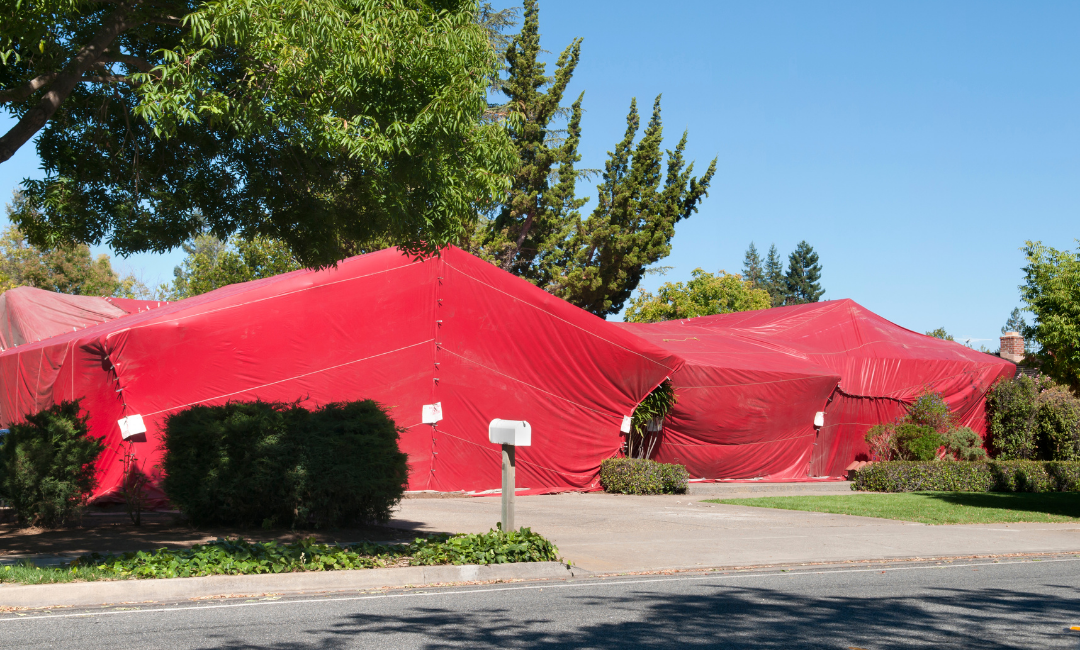
Your termite fumigation cost isn’t just about square footage. These seven factors can bump your bill by thousands:
- Infestation severity matters. A small infestation might need basic fumigation. But when pest control professionals find mud tubes reaching your attic? That severe infestation adds $800-1,500 to your tenting cost.
- Multiple termite species. Got both drywood termites and subterranean termites? You’ll need tenting fumigation PLUS a chemical barrier treatment. That’s an extra $1,000-2,000.
- Second-story complications. Two-story homes need specialized tent setup equipment. The fumigation process takes longer, adding 20-30% to your base price.
- Roof complexity kills budgets. Multiple peaks, dormers, and valleys mean more tarp material and labor. Complex roofs add $500-1,200.
- Attached structures. That connected garage or Florida room? Each one adds $300-600 to properly seal during termite fumigation.
- Rush scheduling. Need it done before closing? Emergency fumigation typically costs 25-40% more than standard scheduling.
- Location. Miami-Dade and Broward counties run 15-20% higher than inland areas. Warmer climates mean year-round demand.
Caught’em provides detailed quotes that break down each factor—no surprises when the bill arrives.
Hidden Fees Companies Won’t Mention Upfront
That lowball quote? It’s missing half the charges. Here’s what termite tenting companies “forget” to mention:
- Mandatory roof tarping: $400-800. Some termite extermination companies call this an “add-on” after you’ve already committed. It’s actually required by law in Florida.
- Bag-and-seal fees: $150-300 for special bags to protect food, medicine, and mattresses. Many pest control providers charge per item.
- Secondary treatments: Your termite inspection reveals dampwood termites, too? That’s another $500-1,000 they didn’t quote initially.
- “Difficult access” charges: Crawl spaces, attics, or tight areas trigger $200-500 upcharges. Funny how every house suddenly has “difficult access.”
- Chloropicrin warning agent: $75-150. It’s the tear gas smell they add for safety. Required, but rarely mentioned upfront.
- Extended fumigation time: If the first round doesn’t eradicate termites completely, you’re looking at another $500-1,000 for extended treatment.
- Termite bond setup: Want protection after treatment? That’s $300-500 annually, starting immediately.
At Caught’em, our quotes include everything—bags, tarps, warning agents. The price we quote is the price you pay. No games, no surprises at invoice time.
Cost Comparison: Tenting vs. Spot Treatments
Should you tent the entire house or try spot treatments? Let’s talk real numbers and effectiveness.
Spot treatments cost $300-800 per area. Sounds cheaper than $3,000 to tent a house, right? Here’s the catch: termites rarely stay in one spot. You treat the kitchen, they’re already in your wood beams upstairs.
| Treatment Type | Initial Cost | Success Rate | Best For |
|---|---|---|---|
| Full tenting | $2,000-4,000 | 99.9% | Large infestations, drywood termites |
| Spot treatments | $300-800/area | 70-80% | Single, accessible colony |
| Micro treatments | $500-1,500 | 75-85% | Early detection |
| Heat treatment | $1,200-2,500 | 95% | Furniture, small areas |
The math gets ugly fast. Three spot treatments equal one tenting. Plus, if spots fail (30% chance), you’re tenting anyway—after spending $2,400 on failed attempts.
Liquid termiticides and bait stations work great for subterranean termites, but won’t touch drywood colonies in your attic. Meanwhile, one fumigation session eliminates everything.
Caught’em offers both options, but we’ll tell you straight: severe termite activity needs tenting. Why waste money on Band-Aids?
How to Cut Costs Without Cutting Corners
Want to reduce your average cost without risking structural damage? Smart moves actually exist.
- Bundle your neighbors. Get 2-3 houses tented together, save 15-20% each. Termite fumigation companies love efficiency. We’ve saved neighbor groups $500-800 per home this way.
- Schedule off-season. November through January sees 20-30% lower prices. Pest control companies need to work when termite swarms slow down.
- Do your own prep. Bagging food, removing plants, and clearing the perimeter yourself saves $200-400 in labor charges.
- Combine services. Need regular inspections or annual inspections? Bundle them with treatment for instant savings. Caught’em offers package deals that include your termite bond and future pest control services.
- Act fast on early detection. A small infestation caught during a routine initial inspection costs 50-70% less than waiting until you see wood damage.
- Get multiple quotes. But compare apples to apples. Some companies offer free inspections but inflate treatment costs. Others lowball treatment but hit you with fees.
Skip the DIY fumigation tents on Amazon. They’re illegal in Florida and won’t penetrate wooden structures where termites inside actually live.
Red Flags in Suspiciously Cheap Quotes
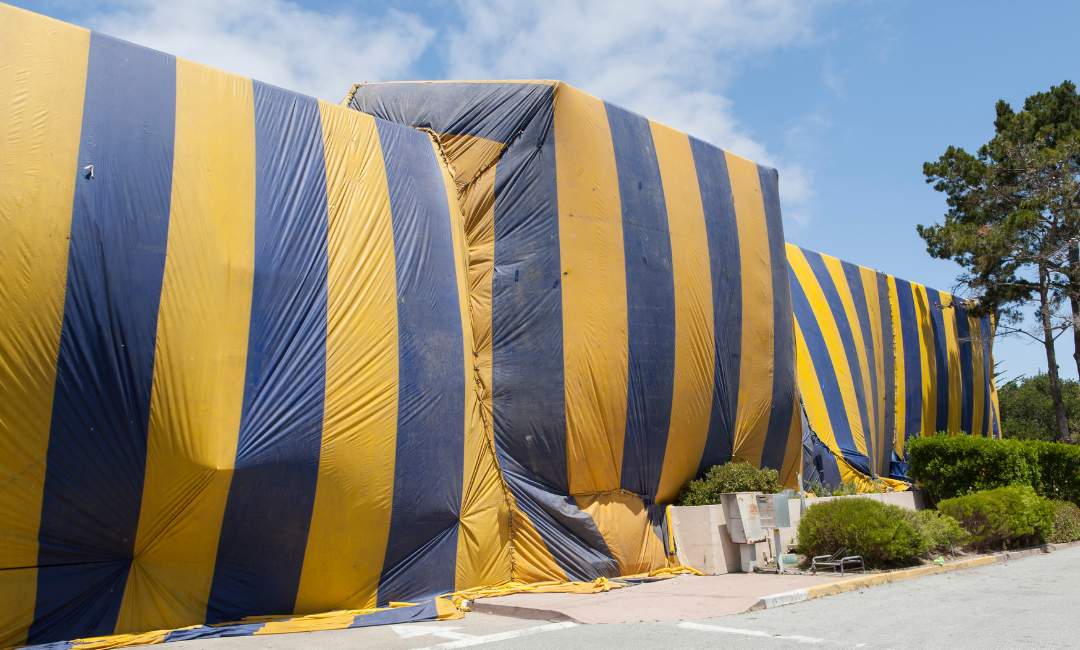
That $999 whole-house tenting deal? Run. Here’s what sketchy pest control providers aren’t telling you:
- “Per room” pricing tricks. They quote per room, not per square foot. Your 2,000 square foot home suddenly needs 12 “treatment zones” at $300 each.
- No license numbers. Legitimate termite extermination companies display their license prominently. No license = no insurance = your problem when things go wrong.
- “Alternative” fumigants. Cheaper chemicals don’t penetrate live inside wood beams where colonies hide. You’ll be tenting again within months.
- Cash-only deals. Professional pest control companies take cards and checks. Cash-only means no paper trail when their treatment fails.
- Instant quotes without inspection. Real cost of termite treatment requires seeing the termite problem. Phone quotes without visiting are fantasy numbers.
- No warranty mention. Reputable companies guarantee their fumigation work. If they won’t discuss warranties upfront, they won’t honor them later.
- Pressure tactics. “Sign today or price doubles!” Real termite infestation is urgent, but legitimate companies don’t use scare tactics.
Caught’em provides detailed, written estimates after thorough inspection. Our license, insurance, and warranties? All verifiable before you pay a penny.
Get Your Termite Tenting Done Right With Caught’em
Termite tenting costs more than you expect, but less than costly repairs from waiting too long. Now you know the real numbers, the hidden fees, and how much does it cost to protect your home’s structural integrity.
Key takeaways:
- Expect $1-4 cost per square foot for the entire home
- Watch for hidden fees that add $500-1,500
- Tenting beats tentless treatment for serious structural damage
- Bundle services to prevent termites long-term
- Act fast—the more severe the infestation, the higher your bill
At Caught’em, we’ve protected South Florida homes for 20+ years with transparent pricing and free estimates. While other treatments might seem cheaper initially, our complete tenting service includes everything—bags, tarps, and even treating for bed bugs and other pests if we find them. One price, one solution, guaranteed results.
FAQs
Is termite tenting worth it?
Absolutely. While bait systems and liquid treatments work for minor issues, tenting offers a 99.9% success rate for eliminating entire colonies. The $2,000-4,000 investment prevents $10,000+ in structural repairs later.
Plus, unlike spot treatments that often fail, one tenting session using toxic gas penetrates every wooden surface, killing all termites in 72 hours. It’s the only guaranteed solution for drywood termites living deep inside your walls.
Does homeowners’ insurance pay for termite tenting?
Unfortunately, no. Homeowners insurance considers termite damage “preventable maintenance,” not sudden damage. They won’t cover treatment costs or termite-related repairs.
However, if termites cause a covered peril (like a beam collapse that damages your roof), that secondary damage might be covered. Your best bet? Invest in annual termite bonds that cover future treatments if termites return.
How often should you tent for termites in Hawaii?
Hawaii’s year-round termite pressure typically requires tenting every 7-10 years, though some homes need it every 5 years. The frequency depends on your neighborhood’s infestation levels, construction materials, and preventive measures.
Regular annual inspection or pest control method catches problems early, potentially extending the time between tentings. Many Hawaii residents combine tenting with ongoing bait station monitoring for maximum protection.
Does termite fumigation really work?
Yes—fumigation has a 99.9% kill rate when done properly. The gas penetrates walls, furniture, and anywhere termites hide, eliminating the entire colony within 72 hours. The key is proper tent sealing and adequate gas concentration. While some worry about effectiveness, professional fumigation remains the gold standard for complete termite elimination, especially for drywood species.

